
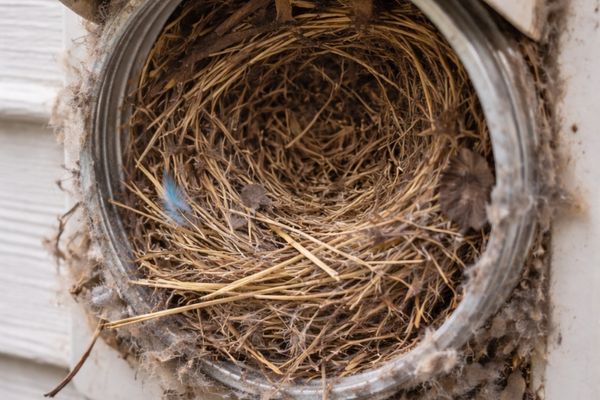
If you’ve ever heard chirping coming from inside your laundry room wall, you already know the problem. Birds love dryer vents. The warm air, the sheltered opening, and the tucked away location make it prime real estate for nesting.
The issue is that a dryer vent bird nest creates a serious blockage, and blockages lead to overheating, fire risk, and a dryer that can’t do its job. A dryer vent bird guard is a simple, inexpensive fix that keeps wildlife out without restricting airflow. And if you don’t have one installed, it’s worth taking care of before nesting season kicks in.
Why Birds Target Dryer Vents
Birds are looking for warm, enclosed spaces to build nests, especially in spring and early summer. Your dryer vent exhaust checks every box.
It vents warm air, which attracts nesting birds in cooler weather. The vent opening is typically sheltered under eaves or siding. Standard vent flaps are lightweight and easy for birds to push past. And once inside the duct, the enclosed space feels safe from predators.
Sparrows, starlings, and wrens are the most common culprits, but any small bird can make its way in. Once they start building, the nesting material packs tightly inside the ductwork and creates a dense obstruction that your dryer can’t push air through.
What a Bird Nest Does to Your Dryer Vent
A dryer vent bird nest isn’t just an inconvenience. It’s a functional and safety problem that gets worse the longer it stays.
Airflow drops significantly. Nesting material, feathers,
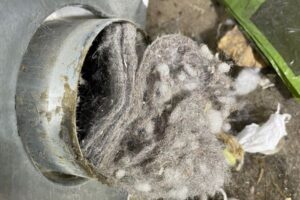
and debris block the duct and prevent your dryer from exhausting properly. Clothes take longer to dry, and the system runs hotter than it should.
Fire risk increases. Lint that would normally exit the vent gets trapped behind the nest. Combine compressed lint with an overheating dryer and you’ve got the exact conditions that cause dryer fires. According to UL Solutions, the combination of high heat, a small chamber, and combustible materials is what makes dryer fires so dangerous, with failure to clean cited in 33% of all dryer fire incidents.
Moisture backs up into the home. When humid air can’t escape through the vent, it pushes back into the laundry room. That leads to mold growth inside the ductwork and on surrounding walls.
And then there’s the smell. Decomposing nesting material, droppings, and in some cases dead birds create unpleasant odors and can attract insects. At that point you’re looking at a full pest removal and line sanitization to get the system back to normal.
What Is a Dryer Vent Bird Guard?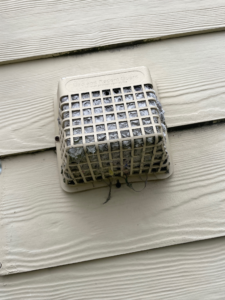
A dryer vent bird guard is a protective cover that fits over your exterior vent opening. It’s designed to let air flow freely while blocking birds and other small animals from entering the duct.
There are a few styles that work well. Cage style guards attach over the vent and use a wire or metal mesh enclosure to keep birds out. They’re effective and easy to clean. Louvered covers with built in screens replace your existing vent cover with one that includes a fine mesh layer behind the louvers. And pest proof vent caps combine a damper with a guard, preventing birds from pushing through the flap.
The key with any dryer vent screen or bird guard is that it needs to block pests without trapping lint. A screen that’s too fine will clog quickly and create the same airflow problems you’re trying to avoid. That’s why a professional vent cover replacement matters. The right guard for your setup depends on the vent type, location, and duct configuration.
Dryer Vent Screen vs. Bird Guard: What’s the Difference?
You’ll see both terms used online, and they overlap, but there’s a practical distinction worth knowing.
A dryer vent screen typically refers to a mesh or wire screen placed directly over the vent opening. These can work, but cheaper screen products with very fine mesh tend to catch lint and need frequent cleaning to avoid blockages. If lint builds up on a screen and nobody clears it, you end up with the same restricted airflow that causes overheating and long dry times.
A dryer vent bird guard is usually a more complete solution. It’s built specifically to prevent nesting while maintaining proper airflow, often combining a cage or housing with appropriately sized openings that pass lint but stop birds.
For most homeowners, a purpose built bird guard is the better long term option. It solves the pest problem without creating a new maintenance headache.
Signs You Might Already Have a Bird Nest in Your Vent
If any of these sound familiar, it’s worth getting your vent checked:
- You hear scratching, chirping, or fluttering near the dryer or inside the wall
- Your dryer takes significantly longer to dry clothes than it used to
- There’s a noticeable smell coming from the dryer or vent area
- You see nesting material, feathers, or droppings around the exterior vent opening
- The vent flap doesn’t open when the dryer is running
If a bird has already nested in your vent, the nest and all debris need to be professionally removed before a guard is installed. Simply covering the opening with a nest still inside traps the blockage and makes things worse. A full dryer vent cleaning should always come before any guard installation.
When to Install a Bird Guard
The best time is before nesting season, which typically runs from early spring through summer in the Portland area. But if you’re reading this in the middle of July and you’ve never had a guard installed, don’t wait until next year. Birds will nest in any season if the conditions are right.
If your exterior vent cover is damaged, missing, or just a basic flap with no protection, you’re leaving an open invitation. A quick dryer vent inspection can tell you exactly what you’re working with and what type of guard makes sense for your setup.
Keep Your Vent Clear and Your Dryer Safe
A dryer vent bird guard is a small investment that prevents real problems. It protects your ductwork, keeps your dryer running efficiently, and eliminates one of the most common causes of vent blockages in residential homes.
If you’re not sure whether your vent is protected or you suspect something’s already nesting in there, contact Dryer Vent John to schedule a vent inspection and bird guard installation before it turns into a bigger issue.